Nutrition
Good nutrition supports children’s growth, learning, energy and overall wellbeing. Healthy eating habits established in early childhood can last a lifetime.
Dietary Guidelines
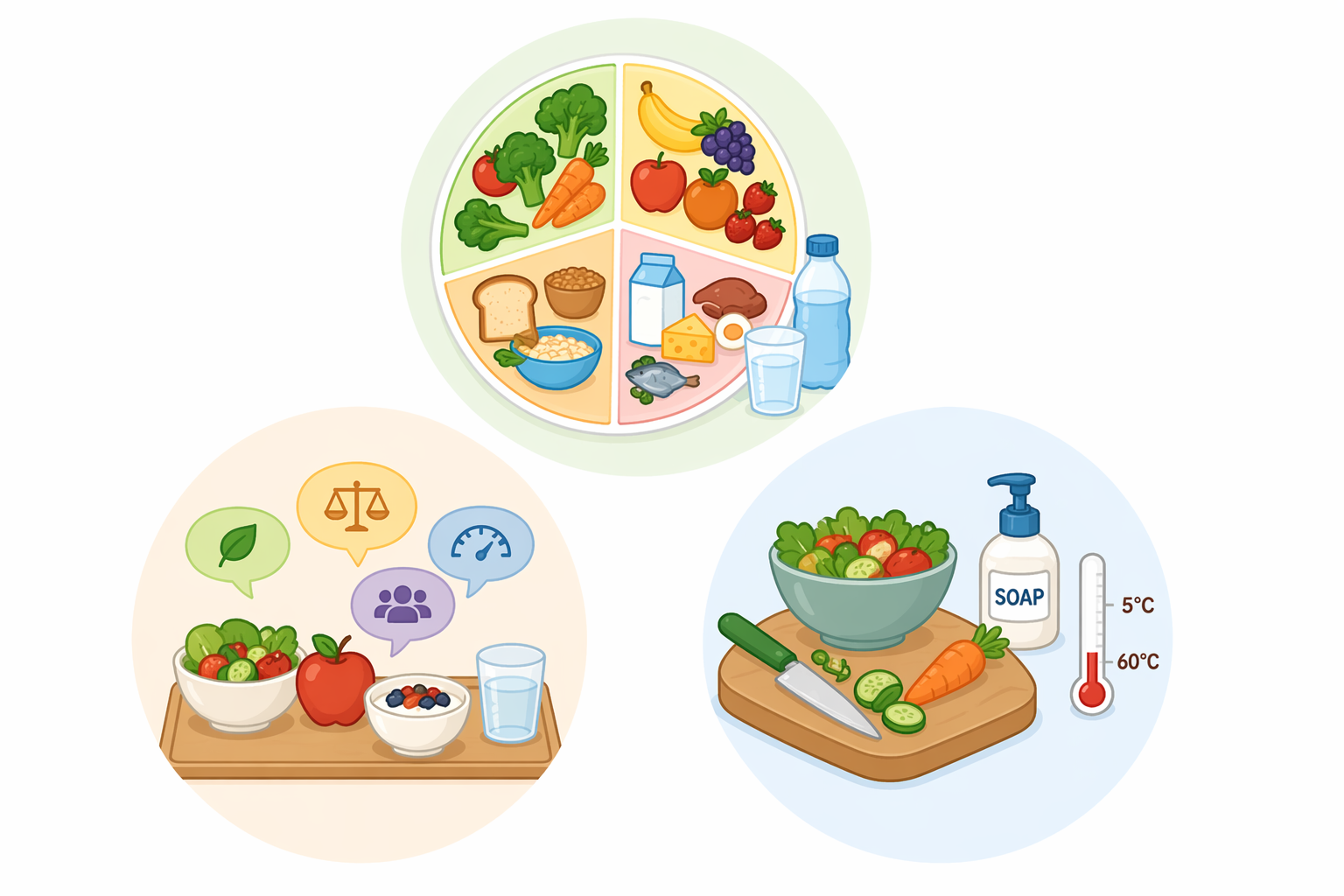
The Australian Dietary Guidelines provide evidence-based recommendations to support healthy eating and drinking for children.
Offer a variety of foods from each of the five food groups.
Make water “the drink” most of the time.
Limit consumption of discretionary foods (high in saturated fat, added salt and/or added sugar).
Serve the right amount (portion size) for children’s age and activity levels.
Encourage eating meals and planned snacks at regular times.
Be active every day.
(National Health and Medical Research Council, 2020)


Overview of the Australian Guide to Healthy Eating
(Service, 2016)
HealthWorks! Healthy Living Series: Portions | Cincinnati Children's
(Cincinnati Children's, 2019)
Healthy Hydration: Helping Kids Choose Water | American Academy of Pediatrics (AAP)
(American Academy of Pediatrics, 2021)
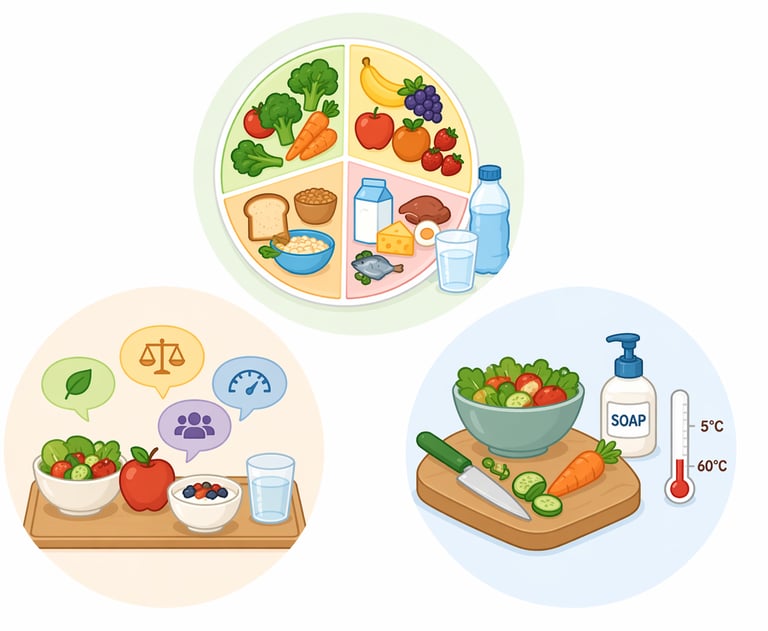
Basic Food Concepts
Understanding basic food concepts helps children develop positive attitudes and healthy eating habits.
Eat a variety of foods most days.
Try to achieve balance by choosing from the five food groups every day.
Moderation – eat the healthier foods most of the time and treat foods sometimes.
Enjoy your food! Food is pleasurable and important for social interactions and cultural traditions.
Listen to your body’s hunger and fullness signals
Encourage children to participate in food shopping/cooking and decision-making
(Australian Government, 2019; National Health and Medical Research Council, 2022)


Incorporating Healthy Meals into a Childcare Center
(CWRU PRCHN, 2017)
1 5 6 VIDEO 1 3 THE AUSTRALIAN GUIDE TO HEALTHY EATING
(Royal Flying Doctor Service of Australia, 2019)
Healthy Eating in Childcare: Advice and Challenges
(CWRU PRCHN, 2017a)
Food Preparation and Safety
Safe food handling and preparation practices help prevent foodborne illness and keep children healthy.
Always wash hands thoroughly with soap and water before handling food.
Keep bench tops, chopping boards, utensils and equipment clean. Use a sanitiser to reduce bacteria after cleaning.
Separate raw meat from cooked food. Store raw meat in sealed containers on the bottom shelf of the fridge.
Cook foods thoroughly (to appropriate temperatures) and keep hot foods hot (> 60°C) and cold foods cold (< 5°C).
Store perishable foods correctly and don’t forget to check use-by dates.
Maintain good food hygiene practices from start to finish.
(FSANZ, 2025; NSW Health, 2022)


Food labels: Storage and preparation
(NSWFoodAuthority, 2023)
Food Service Requirements for Child Care Centers
(CDSS CCLD Childcare Videos, 2021)
Leap Start Early Learning Child Care - Kitchen & Laundry
(Leap Start Early Learning Child Care, 2017)
Get In Touch With Us
info@childwellnesshub.com