Ensuring Children's Safety
Early childhood educators play a vital role in creating safe, supportive and healthy environments where children can learn, grow and thrive.
Service Environments
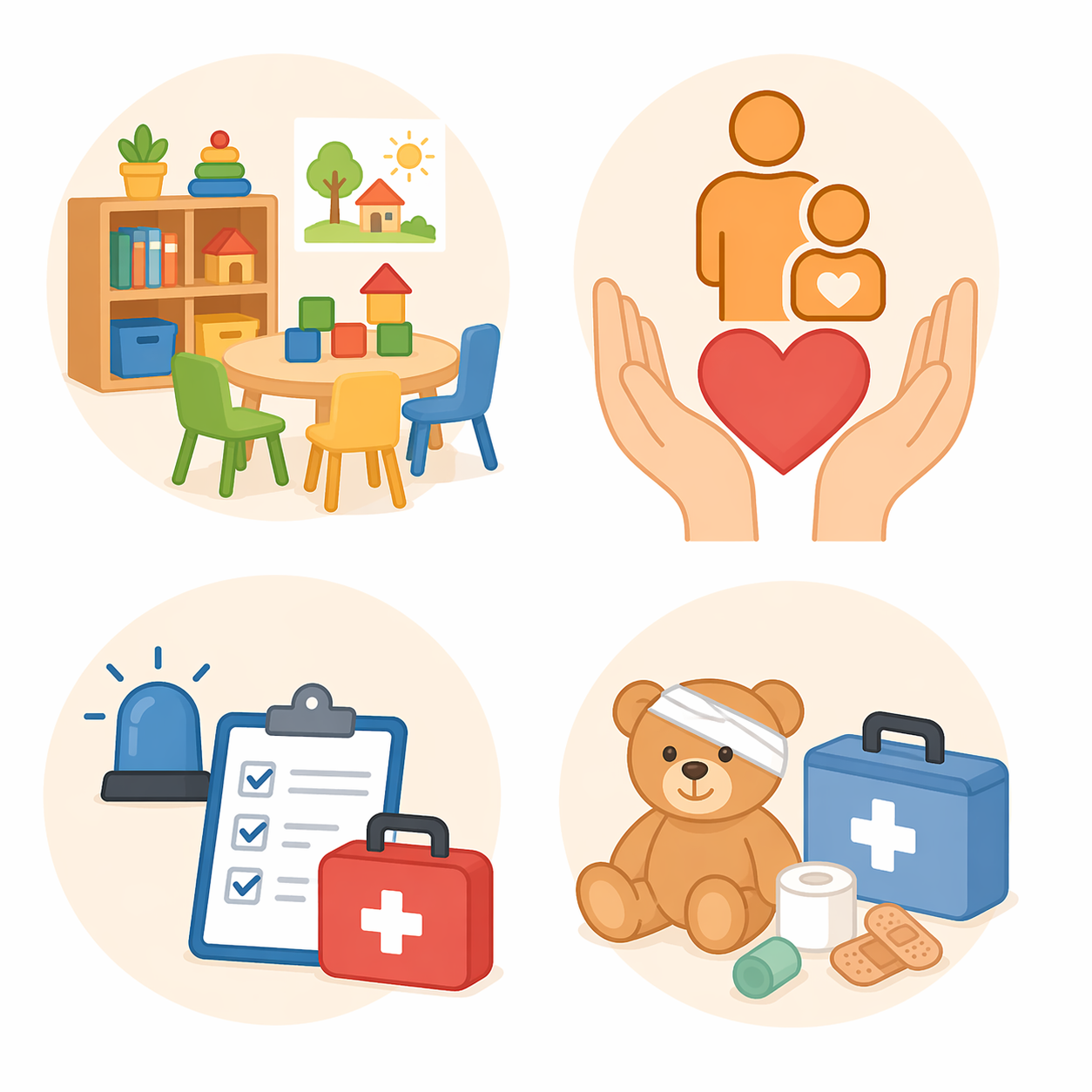
Safe, clean and inclusive environments allow children to maintain their health, wellbeing and ability to learn. Educators are responsible for providing safe spaces that limit hazards and promote healthy nutrition and practices. This includes serving healthy food and drinks, providing clean drinking water, allowing hygienic practices and ensuring children have safe age-appropriate environments they can explore and play in. (ACECQA, 2018; NSW Department of Education, 2024).
● Ensure indoor and outdoor areas are safe and clean
● Promote healthy food and drinks, and regular active play
● Embed hygiene practices in daily routines
● Make sure the environment is inclusive and culturally safe.


Maintaining the Safety and Security of Children
(CareTutor, 2026)
Risk assessment and management
(Queensland Department of Education, 2026)
Cultural safety with Professor Tony Dreise
(Queensland Department of Education, 2026)
Maltreatment, Abuse and Neglect
Children have a right to feel safe and be protected from abuse. Educators need to stay vigilant, recognise indicators of abuse and follow mandated reporting requirements and service policies. Ensuring children feel safe and supported through trusting relationships and open communication (ACECQA, 2018; Australian Human Rights Commission, 2020). .
Understand indicators of abuse and neglect
Follow service policies and procedures around child protection
Notify relevant authorities when you have concerns
Encourage an empowering culture of safety and respect.


Recognizing Child Abuse and Neglect
(ProCPR, 2026)
Recognising Indicators of Child Abuse Demo
(BVS Training, 2015)
Mandatory Reporting
(Safeguarding Services, 2026)
Emergencies
Emergencies can occur that require you to take quick action to protect children’s safety and wellbeing. You should know how to calmly and safely evacuate or lock children down in an emergency. You may need to respond to severe weather events or medical emergencies (ACECQA, 2018; Safe Work Australia, 2023). Practising safety drills helps you prepare for these types of situations.
Develop, practise and review your emergency and evacuation plans
Ensure you have up-to-date medical information and emergency contacts for all children
Store emergency equipment so it is easily accessible
Debrief with children and their families if an incident occurs


Child Care Emergency Disaster Plan
(Rick St. Charles, 2010)
Disaster Planning and Fire Safety
(CDSS CCLD Childcare Videos, 2026)
When & how to call 911. Teaching children how to call 911 using various phones.
(AboutKidsHealth, 2020)
First Aid
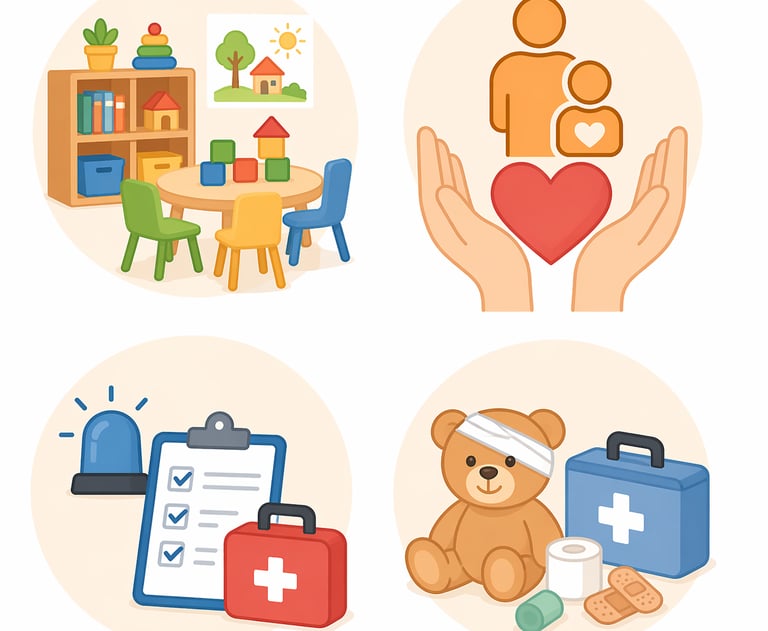
First Aid is necessary when someone becomes injured or unwell. Teachers must have up-to-date approved first aid credentials. There should always be accessible first aid equipment. Correct action can prevent further injury to children and limit their distress (ACECQA, 2018).
Valid up-to-date First Aid credentials
First aid kits complete and readily available
Processes in place for injury/illness/incident
Records kept and families contacted immediately


Mini First Aid Early Years - First Aid with Freddie
(Mini First Aid, 2018)
First Aid Kit Activity for Children and Young People | Winston's Wish
(Winston's Wish, 2026)
Reasons to do a Child Care First Aid course
(Australia Wide First Aid, 2026)
Get In Touch With Us
info@childwellnesshub.com